A Bright New Chapter: The 2026 World Cup as North America’s Bold Leap Forward for Football
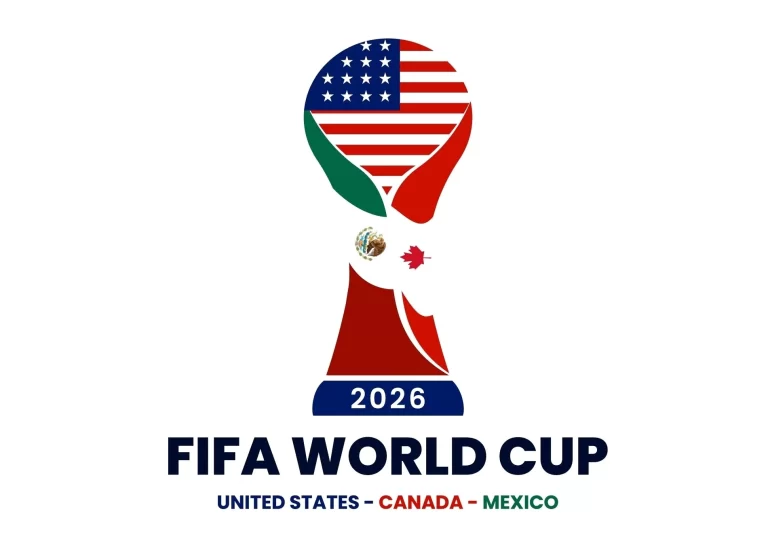
When the World Cup arrives in North America next year, it will mark the beginning of an exciting new chapter. For the first time in the tournament’s 96-year history, three nations — the USA, Canada and Mexico — will unite to host what promises to be the biggest, most inclusive and most ambitious World Cup ever held.
The landmark decision, made at the 68th FIFA Congress in Moscow in 2018, was not just an endorsement of North America’s modern stadiums and commercial strength. It was a recognition of a region embracing a vibrant, expanding football culture built on accessibility, diversity and global connection. Nothing illustrates that progress more vividly than the tournament’s expansion from 32 to 48 teams — a bold step that opens the door to new nations and brings millions more fans into the global football family.
The “United Bid” from the USA, Canada and Mexico was both surprising and perfectly timed. Initially, all three nations considered submitting their own bids, confident in their ability to host independently. But when FIFA confirmed in March 2017 that Europe and Asia were ineligible to host — following Russia in 2018 and Qatar in 2022 — a united North American vision became the clear path forward: three countries, a vast infrastructure base, and a shared commitment to staging a World Cup unlike any before.
That unity resonated. North America earned 134 of the 203 votes cast in Moscow, far outpacing Morocco’s solo bid and securing the tournament with overwhelming global support.
A Historic First Across Three Nations
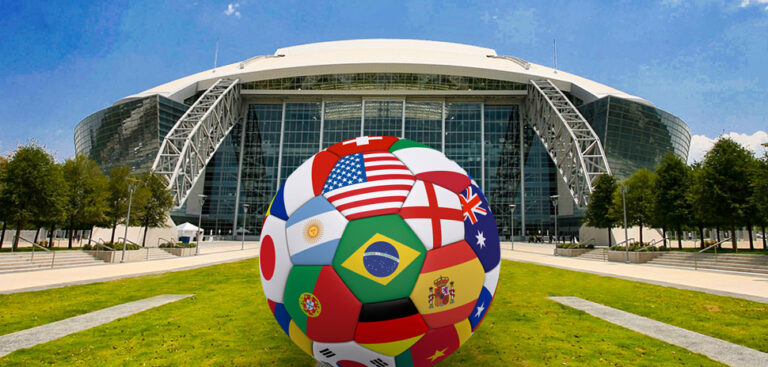
The 2026 World Cup will unfold across 16 cities — the most expansive geographic spread in tournament history. The United States will host matches in 11 cities, while Canada will welcome the world for the first time through two host cities. Mexico, meanwhile, reaches a historic milestone: becoming the first nation ever to host or co-host the World Cup three times, after its iconic tournaments in 1970 and 1986.
This three-nation collaboration represents a fresh direction for FIFA. After co-hosting in 2002, FIFA had largely moved away from multi-country tournaments. But with the global game evolving and the event growing larger than ever, the organisation embraced a new approach to match the scale and ambition of a 48-team World Cup.
Expanding the Global Football Story
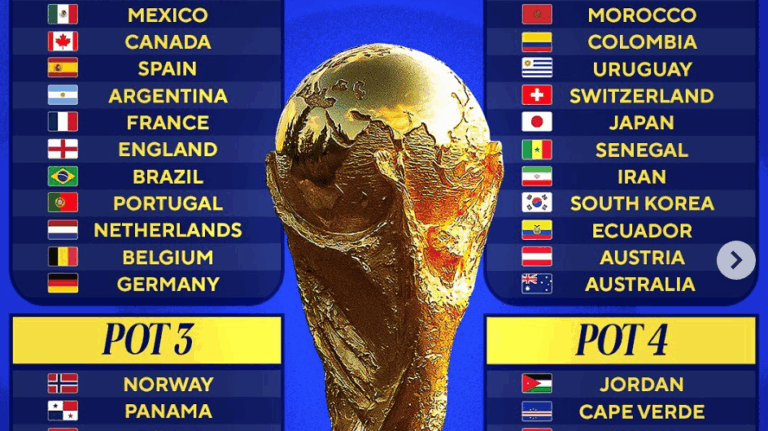
The expanded format is about more than numbers — it symbolises football’s commitment to reaching every corner of the world. The additional 16 slots mean new nations will proudly step onto the sport’s biggest stage for the first time. Cape Verde, Curaçao, Jordan and Uzbekistan will make their historic debuts, each embodying the sport’s widening horizon.
Several others return after long waits. Haiti will re-emerge on the global stage for the first time since 1974. Qatar and South Africa — who last appeared automatically as hosts — now qualify on their own merit, with South Africa celebrating its first earned qualification since 2002.
A Tournament Full of ‘Firsts’
The 2026 edition continues to break new ground through its Intercontinental Playoff, a dynamic six-team contest that offers nations from nearly every confederation one final path to the finals. It is a testament to FIFA’s push for greater inclusivity and opportunity worldwide.
These “firsts” define the heart of the 2026 World Cup:
-
The first tournament to stretch across such a wide and diverse region.
-
The first to bring together three culturally distinct host nations.
-
And the first to welcome nearly 50 competing teams — a truly global celebration of football.
Host Cities
United States: Dallas, New York/New Jersey, Atlanta, Kansas City, Houston, San Francisco Bay Area, Los Angeles, Philadelphia, Seattle, Boston, Miami
Mexico: Mexico City, Monterrey, Guadalajara
Canada: Vancouver, Toronto